The Three Tensions – Book Review

Authors: Dominic Dodd and Ken Favaro
Category: Leadership
Audience: Leaders, Investors, Team Managers
Overview: Winning the struggle to perform without compromise - an exploration of the three core tensions that impact organizational performance and strategies to navigate them effectively.
“It’s deja vu all over again!” - Yogi Berra
This timeless quote from Yogi Berra aptly sets the stage for the book review of The Three Tensions, a book that revisits familiar challenges in organizational leadership with fresh perspectives.
This book came highly recommended from Chip Conley the author of “Peak”…which was one of my prior book reviews.
In a sense, this book IS telling us what we might have learned before. It was published in 2007 and speaks to change management and company performance issues.
However, the authors were consultants who put their own spin and detail into understanding what they believe are the three tensions that impact ’winning the struggle to perform without compromise’.
The beginning of the book describes a system they created and used called the company’s “batting average” and the proven link between a healthy batting average and shareholder return.
They identify the three tensions that can cause batting averages to fall:
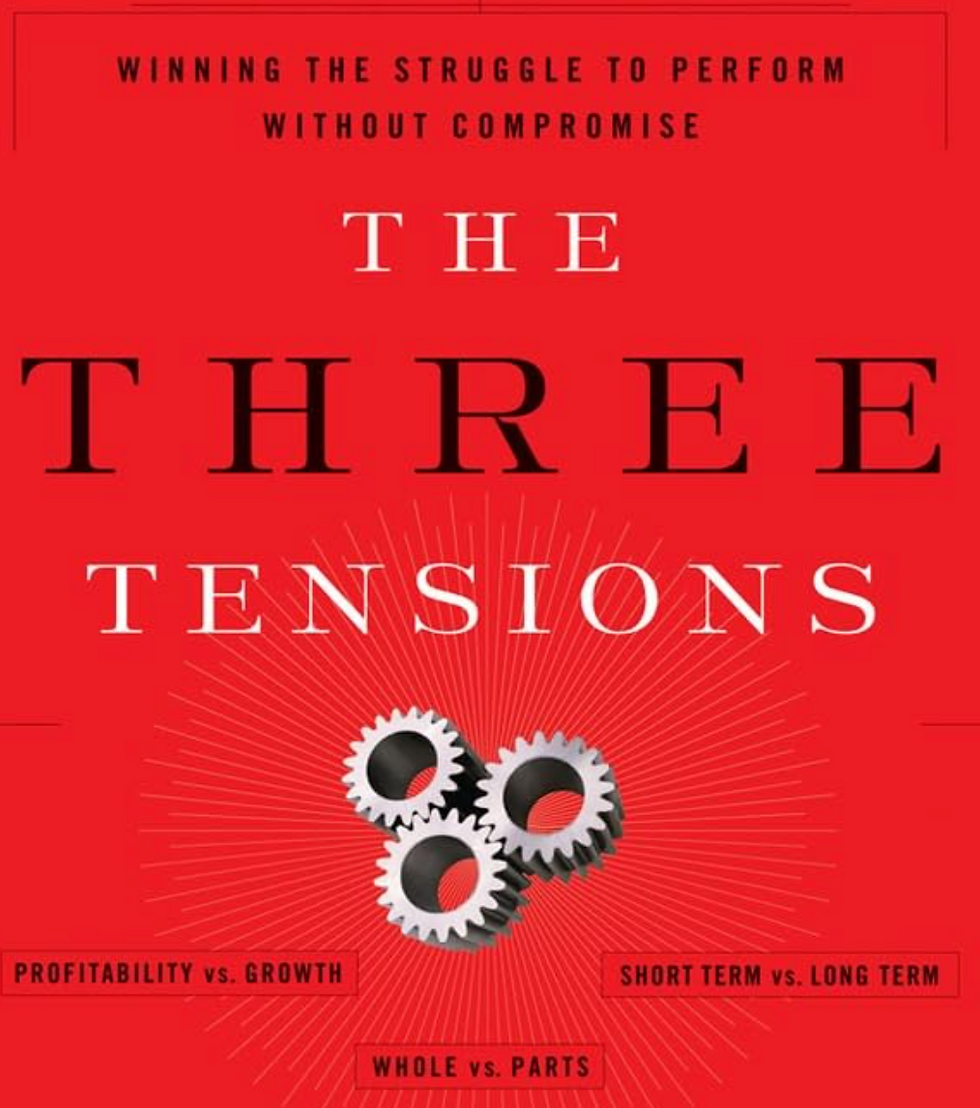
Tension #1: Profitability vs. Growth
Leaders often grapple with the need to be customer-focused while also managing costs effectively. This section discusses the pitfalls of the "Customer Focus Trap" and the "Tying Costs to Earnings Trap."
The authors provide actionable strategies and reflective questions to help leaders achieve both profitability and growth without compromise.
Tension # 2: Short Term vs. Long Term
Balancing immediate results with future sustainability is a common leadership dilemma. This is about today vs the tomorrow scenario. And again, there are traps - ”Present Value Trap” and the trap of “Annual Earnings Growth.”
The author’ key take away of this chapter is: “the aim is not to sustain earnings growth, but to grow sustainable earnings.” Again, there are questions and suggested leadership actions provided.
Tension #3: Whole-vs-Parts
This chapter is about value. They describe both horizontal and vertical value and the batting average in this area increases based on how often a company adds both positive and horizontal value at the same time.
Although the book can get somewhat technical, the explanations, company stories and diagrams are excellent. They also provide an outline of points in each chapter along with questions leaders can ask to move forward and facilitate improving your own company’s improved batting average.
Cynthia Kyriazis is the Chief Experience Officer at The Culture Think Tank. Her experience includes executive coaching, consulting, and training. Book a 15-minute chat to discuss your people, performance, or profit challenges.


Comments